The essentials
When to go to Réunion, in brief
May to October: the austral winter
Cool, dry season. Clear skies, 20-26°C on the coast, low humidity. The prime window to hike and explore the interior.
June to September for hiking
The driest months. Mafate, Salazie, Cilaos and the Piton de la Fournaise are at their best. Cool nights at altitude, pack layers.
Whales from July to October
Humpback whales pass off Saint-Gilles between July and October. The show is visible from the west coast.
November to April: the wet summer
Hot (28-32°C) and rainy, especially in the East. Waterfalls in full flow and green landscapes, but heavy afternoon showers and storms.
January to March: cyclone risk
Peak of the cyclone season. Heavy rain possible, some mountain roads closed. Worth watching closely before you travel.
Two climates, one ticket
The west coast stays dry while the east soaks up rain. The interior (cirques, volcano) is far cooler than the coast.
The verdict
The best periods
May - October
Dry and cool. The prime window for hiking, the cirques and whale watching. Avoid July-August if you want to dodge the French school holidays.
November - December
Rising heat, first rains. Still doable before the cyclone peak, with landscapes already lush and green.
January - March
Peak of the rainy and cyclone season. Muddy trails, occasional road closures, heavy skies across the east.
Month by month
The full calendar
Tap a month for the detailed guide: weather by region, where to go, festivals.
24-31°C
Hot, cyclone risk
24-31°C
The wettest
23-30°C
Rain, cyclones ending
22-29°C
Transition, drying out
20-27°C
Dry returns
18-25°C
Dry, cool, prime hiking
17-24°C
Dry, whales
17-24°C
Dry, high season
18-25°C
Dry, whales
20-27°C
Dry, season ending
22-29°C
Rising heat
23-30°C
First heavy rains
Climate
Climate by region
| Region | Dry season | Wet season | Verdict |
|---|---|---|---|
| West coast (Saint-Gilles) | May-Oct: 20-26°C, dry | Nov-Apr: hot, brief showers | Ideal May-Oct |
| East coast (Saint-Benoît) | May-Oct: mild but wetter | Nov-Apr: heavy rain, the wettest spot | Ideal May-Sept |
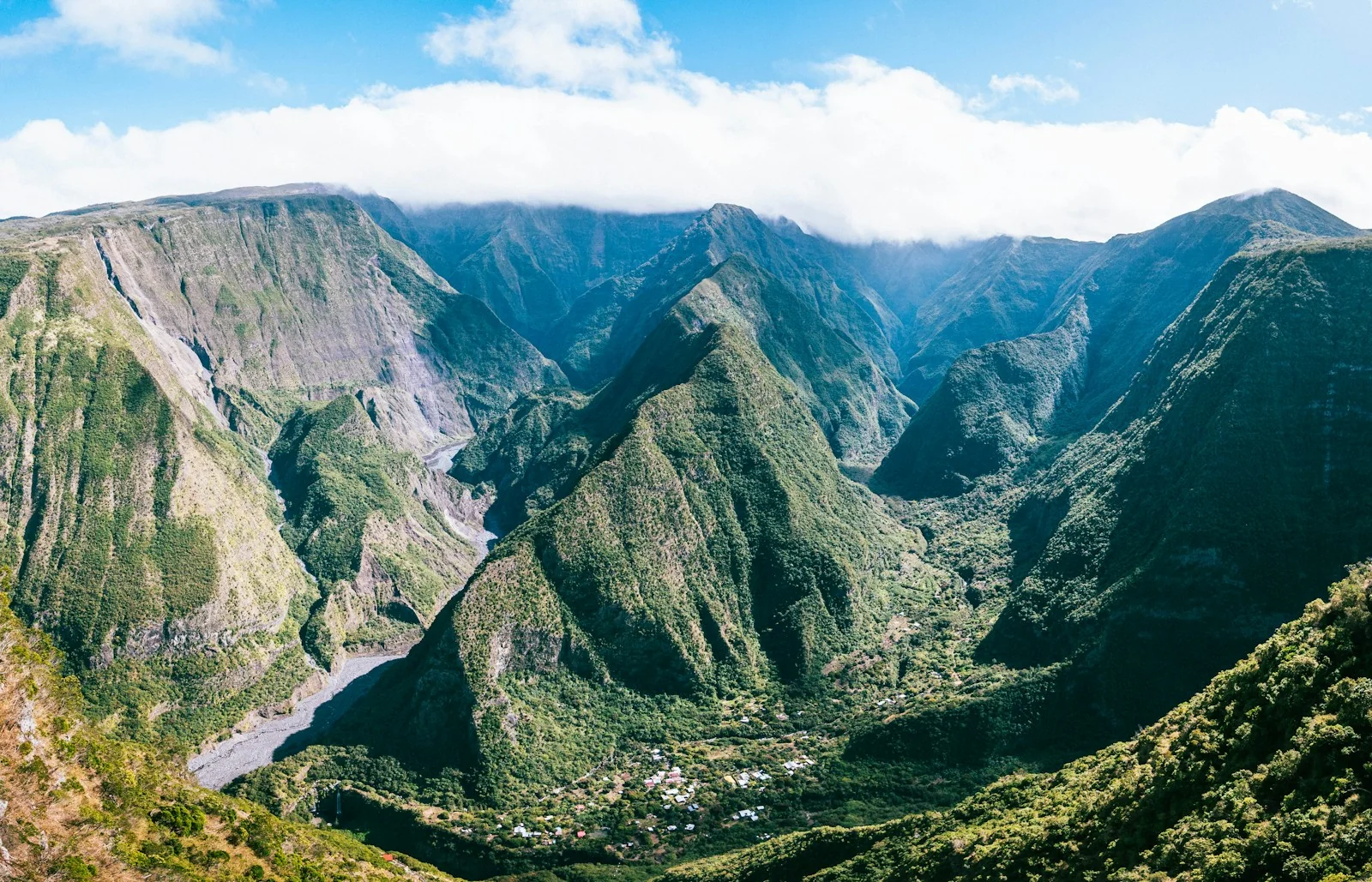
| Cirques (Cilaos, Mafate) | May-Oct: 12-22°C, dry | Nov-Apr: muddy trails, fog | Ideal June-Sept |
| Volcano (Piton de la Fournaise) | May-Oct: cold mornings, 5-18°C | Nov-Apr: cloud, low visibility | Ideal June-Sept |
Calendar
The key events of the year
Dipavali (festival of light)
The Tamil festival of lights, two to five days of parades and oil lamps. Saint-André is its heart, with Saint-Pierre and Saint-Leu.
🇷🇪 Saint-André, Saint-Pierre
Humpback whale season
Whales come up the Mozambique Channel to calve. Boat trips leave from Saint-Gilles, and you can spot them from the west coast.
🇷🇪 West coast
Sakifo Musik Festival
The big Indian Ocean music festival on the Saint-Pierre seafront. Three days of maloya, sega and international acts.
🇷🇪 Saint-Pierre
Turmeric festival (Safran péi)
Harvest and markets around local turmeric at La Plaine-des-Grègues, in the heart of the dry season. Creole food and local produce.
🇷🇪 Saint-Joseph
Our analysis
Réunion runs on one simple flip: aim for the austral winter, May to October. The seasons are reversed from Europe, and it is during this cool stretch that the island is at its finest, from the cirques to the volcano. The rest of the year calls for caution.
The austral winter, May to October
This is the prime window. Skies clear, humidity drops and temperatures stay mild: 20 to 26°C on the west coast, much cooler at altitude. June to September are the driest months, ideal for crossing Mafate, climbing to Cilaos or walking up to the Piton de la Fournaise. Watch the morning chill at the volcano, where the thermometer brushes 5°C.
July and August overlap with the French school holidays: crowds rise and Mafate lodges book out weeks ahead. If you can, target May-June or September-October for the same weather with fewer people.
Whales and light
From July to October, humpback whales pass off the west coast. Boat trips leave from Saint-Gilles, and you can spot them from the shore. Late in the dry season, Dipavali lights up Saint-André and the south with oil lamps and Tamil parades.
The wet summer and cyclones
From November, heat builds and rains return from the east. January to March is the cyclone peak: heavy downpours, muddy trails, occasional mountain road closures. The island does not get a cyclone every year, but the risk is enough to steer hikers away in that window. One useful nuance: even at the height of summer, the west coast stays far drier than the east, and often saves a beach trip.
FAQ
Frequently asked questions
When is the best time to visit Réunion? +
From May to October, the austral winter: dry, cool, 20-26°C on the coast and perfect hiking trails. It is the prime window for the cirques and the volcano.
What is the worst time to visit Réunion? +
January to March are the peak of the rainy and cyclone season: heavy showers, muddy trails, occasional mountain road closures. The time to avoid for hiking.
When can you see humpback whales in Réunion? +
From July to October, when humpback whales come up off the west coast to calve. Boat trips leave from Saint-Gilles, and you can sometimes spot them from the shore.
When to hike the cirques and the volcano? +
From June to September: these are the driest months. Mafate, Cilaos, Salazie and the Piton de la Fournaise are at their best. Pack layers, it gets cold in the mornings at altitude.
Should you worry about cyclones? +
The risk runs mostly from January to March. Cyclones do not hit the island every year, but they can bring heavy rain and close roads. Watch the forecast before traveling in that window.
Do the east and west have the same climate? +
No. The west coast (Saint-Gilles) is much drier, while the east (Saint-Benoît) is the wettest part of the island year-round. The interior is far cooler than the coast.
Marie Laurent · Southeast Asia specialist
Updated June 1, 2026
Go further
Plan your trip to Réunion
Itineraries
Cities and places