L'Heure du Voyage
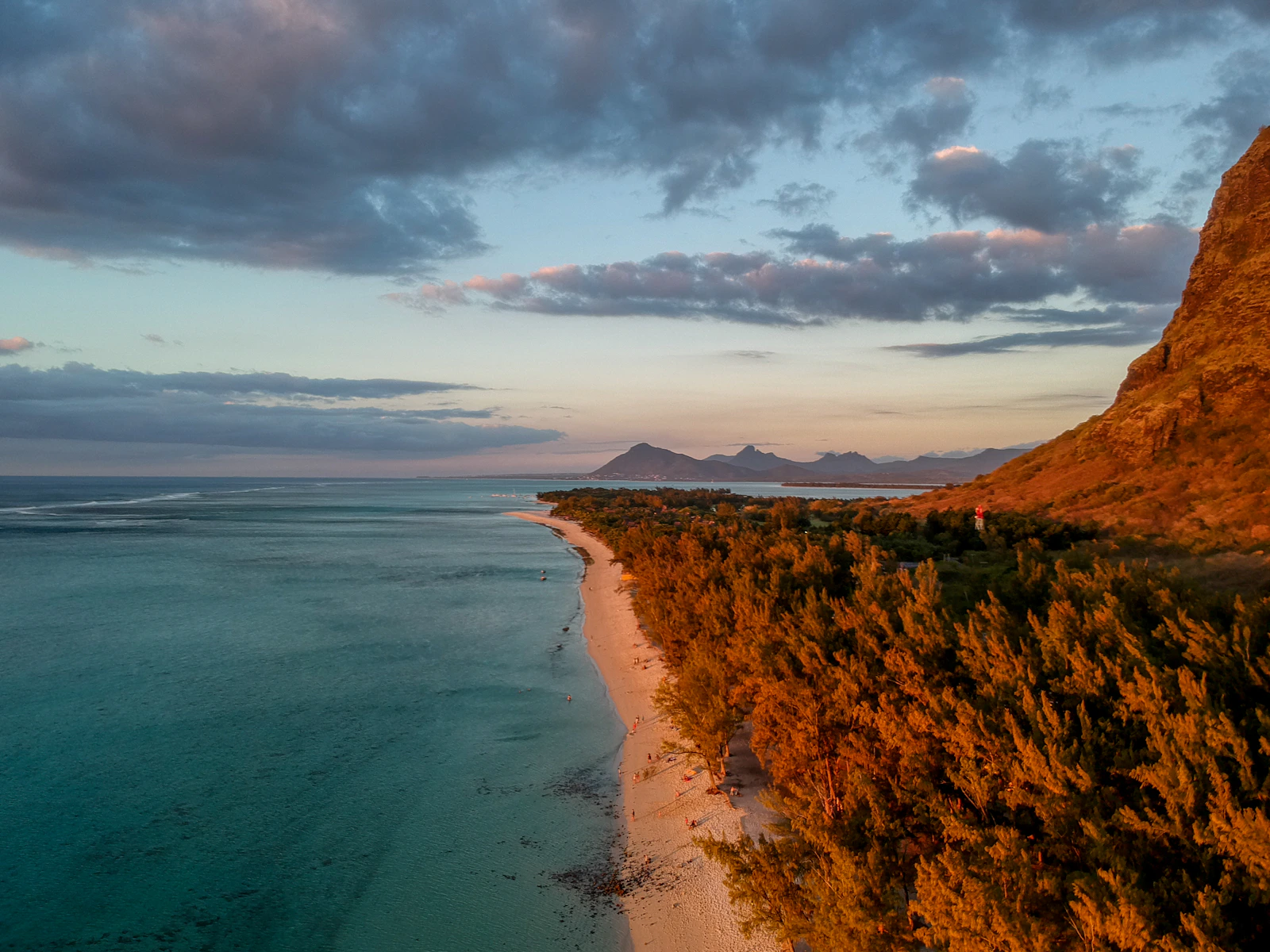
Le Morne Brabant peak and turquoise lagoon at sunset, south-west Mauritius
🇹🇭 Indian Ocean · 1.3M people

Travel to Mauritius: the complete 2026 guide

330 km of coast ringed by a turquoise lagoon, Le Morne Brabant listed by UNESCO and a world-class kitesurf spot, the rainforests of Black River Gorges, the Port-Louis market and the Indo-Creole-Chinese-French cultural fusion. Our guide to plan 7 to 14 days in Mauritius, as a couple, family or honeymoon, at 30 to 40% below the cost of an equivalent Seychelles trip.

Mauritius at a glance

Capital

Port-Louis

Languages

French, English, Creole

Currency

Mauritian Rupee (MUR)

Time diff

+3h (summer), +2h (winter)

Flight from Paris

~11h direct

Average / day

€150-450

Visa

Best season

May-October (austral winter, dry and mild)

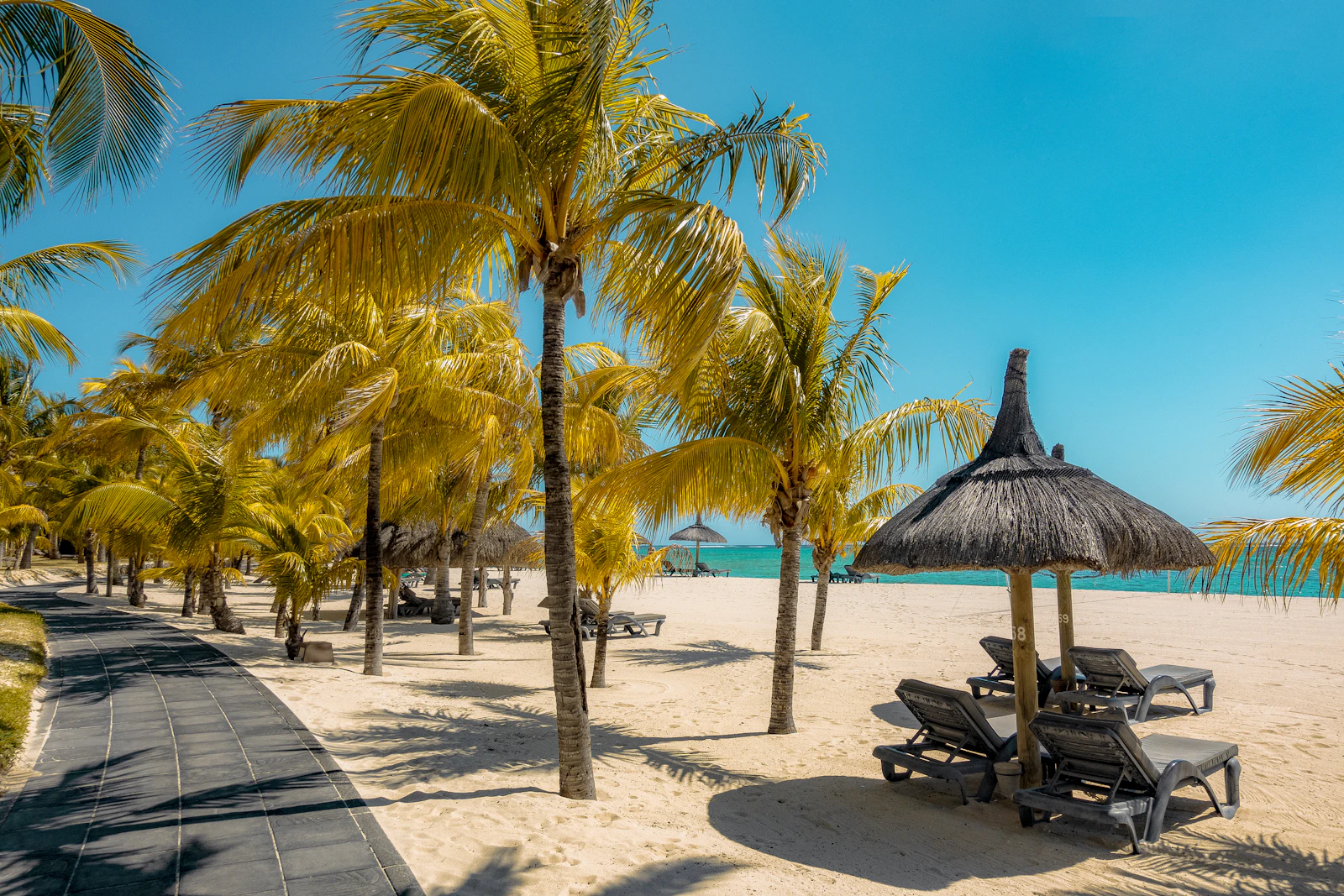
Photo : Colours of Mauritius / Unsplash

In 30 seconds

Why visit Mauritius

  • 1

    A turquoise lagoon along 330 km of coast

    The island is entirely ringed by a coral reef forming a 243 km² shallow, calm lagoon. Swimming and snorkeling possible right off most hotels.

  • 2

    Le Morne, world-class kitesurf spot

    Listed by UNESCO in 2008, Le Morne Brabant is home to One Eye, one of the world's top three kite waves. Kite season runs May to November, steady 20-30 knot wind, water 24-26 °C.

  • 3

    Unique cultural fusion in the Indian Ocean

    Population descended from India (68%), Africa (27%), China (3%), Europe (2%). Three main religions (Hindu, Christian, Muslim) coexist. Cuisine mirrors the blend: rougail, dholl puri, mine frite, biryani, vindaye.

  • 4

    Francophone country, direct flight, no visa

    No visa for EU nationals: 90 days on arrival. Air Mauritius, Air France and Corsair run direct Paris-Mauritius flights in 11h. French and English spoken everywhere in tourism.

  • 5

    30-40% cheaper alternative to the Seychelles

    A 4-star all-inclusive trip costs 30 to 40% less than the Seychelles at equivalent comfort, with a similar lagoon, three times wider hotel choice and more infrastructure (ring road, public transport, restaurants).

Calendar

When to go to Mauritius

Tropical climate with two seasons reversed from the Northern hemisphere. Austral winter (May-October) is the ideal window: 22-26 °C, dry, low humidity, calm sea on the west coast. Austral summer (November-April) is hot (28-32 °C), humid and exposed to cyclone risk between January and March (3-4 tropical depressions per season on average).

Full when-to-go guide →
Ideal Fair Avoid · Click for details

01

Jan

🌡 23-30 °C

02

Feb

🌡 23-30 °C

03

Mar

🌡 23-30 °C

04

Apr

🌡 22-29 °C

05

May

🌡 20-27 °C

06

Jun

🌡 18-25 °C

07

Jul

🌡 17-24 °C

08

Aug

🌡 17-24 °C

09

Sep

🌡 18-25 °C

10

Oct

🌡 19-27 °C

11

Nov

🌡 21-28 °C

12

Dec

🌡 22-30 °C

Detailed programs

Recommended itineraries

1 week

1-week itinerary

📅 1 week 💰 📍 SSR Airport · Trou aux Biches · Grand Baie · Île aux Cerfs · Port-Louis
See itinerary →
2 weeks Best-seller

2-week itinerary

📅 2 weeks 💰 📍 Trou aux Biches · Port-Louis · Belle Mare · Mahébourg · Le Morne · Chamarel
See itinerary →
1 month

1-month itinerary

📅 1 month 💰 📍 Mauritius 9 days · Rodrigues 5 days (1h30 flight)
See itinerary →

Destinations

Cities & islands of Mauritius

By traveler profile

Which trip suits you?

👨‍👩‍👧‍👦

With family

The Indian Ocean's top family pick: shallow calm lagoon everywhere, family resorts (Long Beach, Outrigger, Maritim), kids clubs, decent health infrastructure. Plan €5,500-9,000 for 7 nights for a family of 4 in half-board on the East coast.

💑

Honeymoon

Belle Mare and Le Morne hold the 5-star palaces (Constance Prince Maurice, One&Only Le Saint Géran, Shangri-La Le Touessrok, Royal Palm Beachcomber). Private beach villa, spa, beach dinner. Budget €5,000-12,000 for 7 nights in half-board.

🎒

Backpacker

Mauritius isn't a classic backpacker destination: few hostels, sparse public transport outside main routes. Doable with table d'hôtes and homestays (€40-70/night), local bus €0.50-1.50, Creole meals €4-8. Plan €1,500-2,000 for 10 days excluding flights.

👤

Solo

Safe and easy island in solo, francophone, but clearly built around couples and families. Best base: Tamarin and Le Morne (kitesurf and surf community), or Grand Baie for the livelier side.

🪁

Kitesurfer

Le Morne = world top 5. Spots: One Eye (premium wave), Manawa (inner wave), Kite Lagoon (flat beginner). Local schools (Ion Club, KiteGlobing, C Beyond), board rental €40-60/day. Kite season: May to November.

🍛

Food / fusion cuisine

Rougail, dholl puri (€1-2), biryani, vindaye, mine frite. Central market of Port-Louis, food tour in Mahébourg, restos like Chez Tante Athalie (Pamplemousses), Le Capitaine (Grand Baie). Creole cooking workshop €60-90/person.

In pictures

Mauritius in photos

Must-do

Signature experiences

Plan your trip

Practical info

📄

Mauritius visa

No visa for EU nationals: 90 days granted free on arrival. Passport valid 6 months, return ticket, proof of accommodation.

Read the guide →
🚗

Car rental

Driving on the left (British legacy). Roads generally decent but limited signage. €25-45/day. Essential to explore the island beyond your hotel.

See options →
🛡️

Travel insurance

Private healthcare in Mauritius is decent (Wellkin, Apollo Bramwell, Fortis Darné clinics), evacuation to Réunion or Paris is expensive. €100,000 minimum cover.

Compare →
📡

Mauritius eSIM

Excellent 4G/5G Emtel and MyT coverage everywhere. Airalo or Holafly eSIM from €8 for 7 days, €15-20 for 15 days.

Compare →

How much

Mauritius budget

💰 Calculate my budget →

Backpacker

€1,500

  • ✈️ Paris-Mauritius flight: €750
  • 🏠 Homestay: €50/night
  • 🍛 Creole meals: €20/day
  • 🚌 Bus + 2 trips: €100
Recommended

Comfort

€2,800

  • ✈️ Direct flight: €850
  • 🏨 4-star half-board: €180/night/pers
  • 🚗 Rental car 10 days: €350
  • 🚤 Excursions (catamaran, wild South): €300

Premium

€7,500

  • ✈️ Business class: €2,800
  • 🏨 Constance / One&Only (7n): €550/night/pers
  • 🍷 Spa, gourmet dinners: €150/day
  • 🚖 Private driver 5 days: €500

Our picks

Prepare your trip to Mauritius

Our tested and updated comparisons for a smooth trip to Mauritius.

🏢

Best travel agency for Mauritius

Tailor-made agencies, organized tours, free quotes. Our selection for Mauritius.

See comparison →
🛡️

Travel insurance for Mauritius

Medical coverage, repatriation, cancellation. The best insurance for Mauritius.

See comparison →
📡

eSIM for Mauritius

Data plans, network coverage, pricing. The best eSIM to stay connected in Mauritius.

See comparison →

Combine with

Combine with

FAQ

FAQ

Do you need a visa for Mauritius in 2026? +
No for EU nationals: a 90-day tourist visa is issued free on arrival at Sir Seewoosagur Ramgoolam Airport (Mahébourg, code MRU). Conditions: passport valid 6 months past arrival, return or onward ticket, proof of accommodation. No more physical arrival card since 2023: everything goes through the online Mauritius All-in-One form (fill in 72 hours before arrival).
How many days do you need in Mauritius? +
7 days is enough for a hotel stay on one coast (North at Trou aux Biches, or East at Belle Mare) with 2-3 day trips. 10 days is the optimal format for a full island loop (North, East, wild South, West). 14 days lets you add 5 days in Rodrigues, Mauritius's authentic sister island 1h30 by flight away.
When to go to Mauritius and how to avoid cyclones? +
May to October: austral winter, dry, 22-26 °C, calm sea on the west side. The best window. Cyclone season officially runs November to April, peaking January-March (3-4 tropical depressions per season on average). Real risk: 1 to 2 major cyclones per decade. December is split: high demand (Christmas holidays) but unstable weather.
Should you rent a car in Mauritius? +
Yes to explore the island beyond your hotel. Driving on the left (British legacy), roads generally decent, short distances (Port-Louis to Mahébourg = 50 km, 1h15). Rental €25-45/day from local agencies (Pingouin, Sixt, Avis). Avoid night driving (limited lighting, stray animals). Alternative: private driver €60-90/day.
Mauritius, Seychelles or Maldives: which for snorkeling and diving? +
Maldives: best diving (visibility 30-40 m, whale sharks, manta rays), but much more expensive and resort-isolated logic. Seychelles: most spectacular beaches (Anse Source d'Argent), decent diving, highest prices of the three. Mauritius: ubiquitous turquoise lagoon, decent snorkeling (Blue Bay, Île aux Cerfs), average diving (reef partly damaged), but 30-40% cheaper, far wider hotel choice, real local life outside the resort bubble.
Is Mauritius francophone? +
Yes, largely. Mauritian Creole (French-based) is the mother tongue of 86% of the population. French is spoken everywhere in tourism, administration and media. English remains the official language of education and law. For a francophone traveler, it's one of the most linguistically comfortable long-haul destinations.
Are all Mauritius beaches public? +
Yes, all Mauritian beaches are public by law (Public Beaches Authority Act). No resort can privatize the shoreline. In practice, hotels mark out their portion with sunbeds and umbrellas reserved for guests, but you can settle right next to it on the sand with your own towel. Best public beaches: Belle Mare (5 km), Mont Choisy (North), Flic en Flac, Le Morne, La Cambuse.
Should you pick a hotel in the North or East of Mauritius? +
North (Grand Baie, Trou aux Biches, Mont Choisy): livelier, more restaurants outside the hotel, nightlife, sunsets, easy public beach access, mostly 3-4 star hotels, drier climate. East (Belle Mare, Poste de Flacq, Trou d'Eau Douce): calmer and more preserved, longer beaches, concentration of 5-star palaces (Constance, Shangri-La, One&Only), spectacular sunrises over the sea, windier climate. The North for the buzz, the East for luxury and pure relaxation.
Thomas Bernard

·

Geographer & traveler

Last updated: May 25, 2026.

View profile →