L'Heure du Voyage
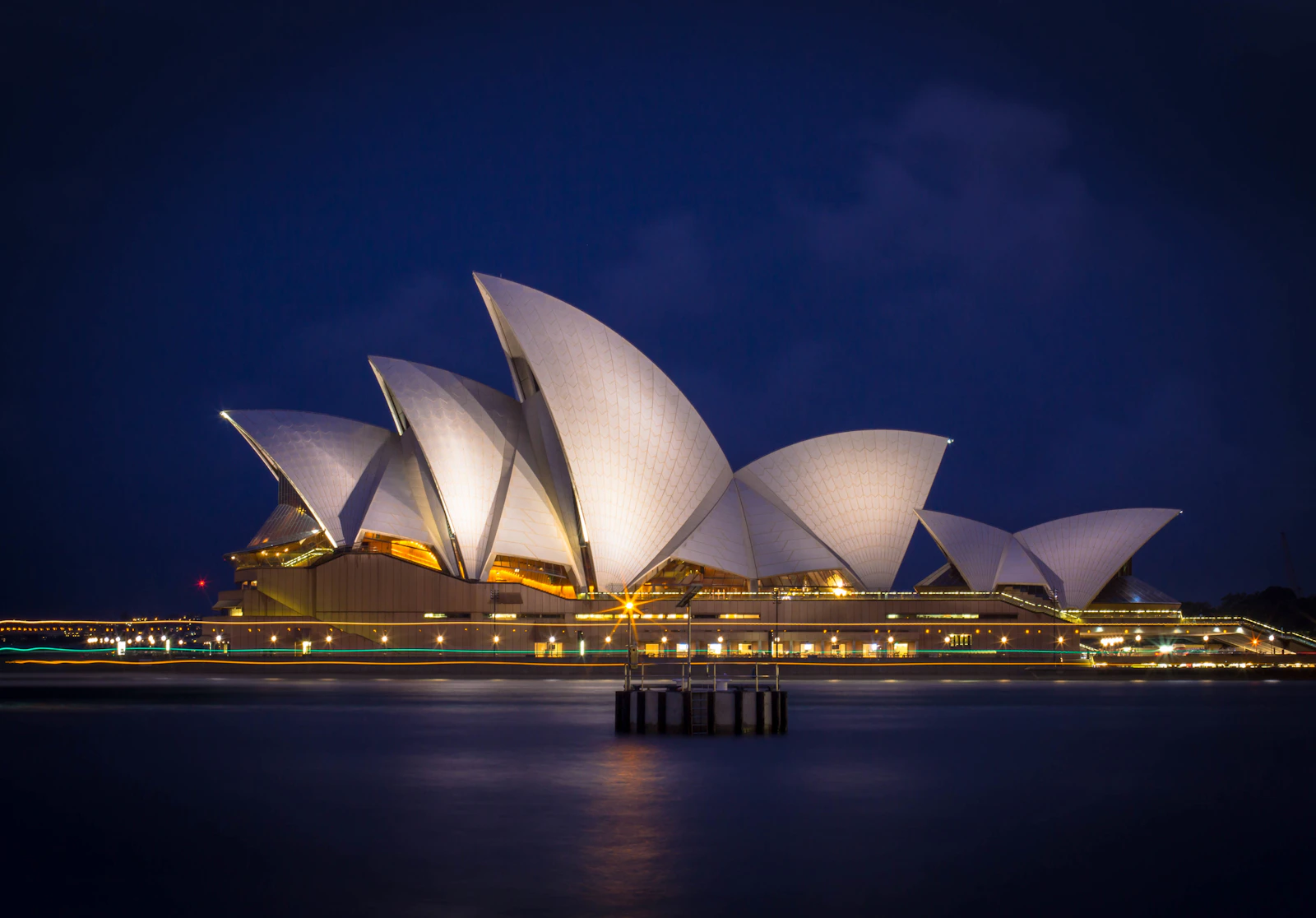
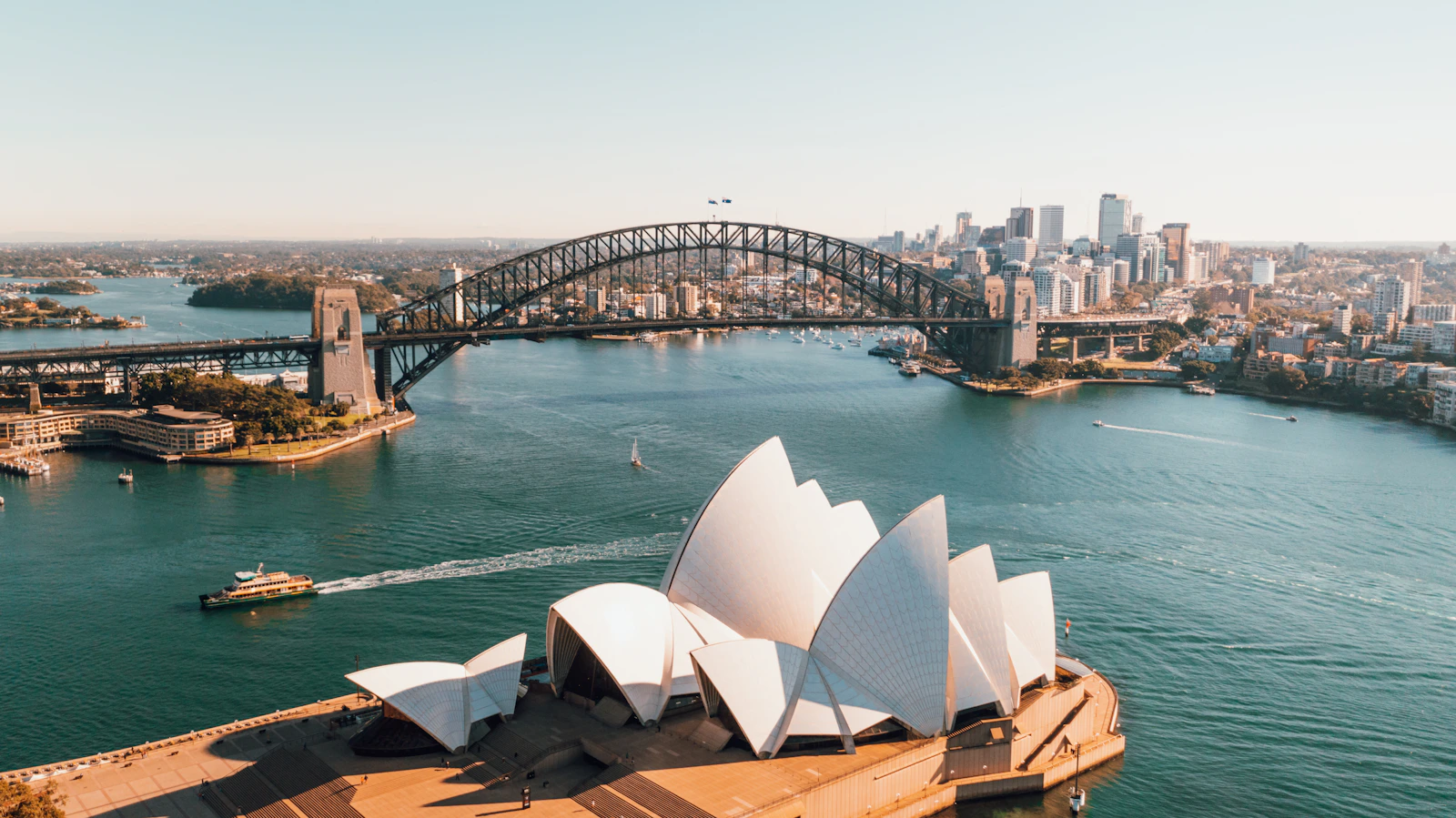
Sydney Opera House on the harbour at sunrise
🇹🇭 Oceania · 26M people

Travel to Australia: the complete 2026 guide

Sydney Opera House and harbour, Great Barrier Reef off Cairns, red Uluru in the Outback, wild Tasmania, the Great Ocean Road and 12 Apostles, Melbourne café culture, Whitsundays. Australia is a country-continent to plan over two to four weeks. Our complete guide to the 2026 ETA, seasons and road trips.

Australia at a glance

Capital

Canberra

Language

English

Currency

Australian Dollar (AUD)

Time diff

+9h East / +7h West

Flight from Paris

~22h (1 stop)

Average / day

€150-350

Visa

Best season

September-November (austral spring)

Photo : Photoholgic / Unsplash

In 30 seconds

Why visit Australia

  • 1

    Great Barrier Reef, the world's largest coral reef

    2,300 km of reefs off Queensland. Snorkeling and diving from Cairns or the Whitsundays. UNESCO listed since 1981, under stress but still spectacular in dry season (June-October).

  • 2

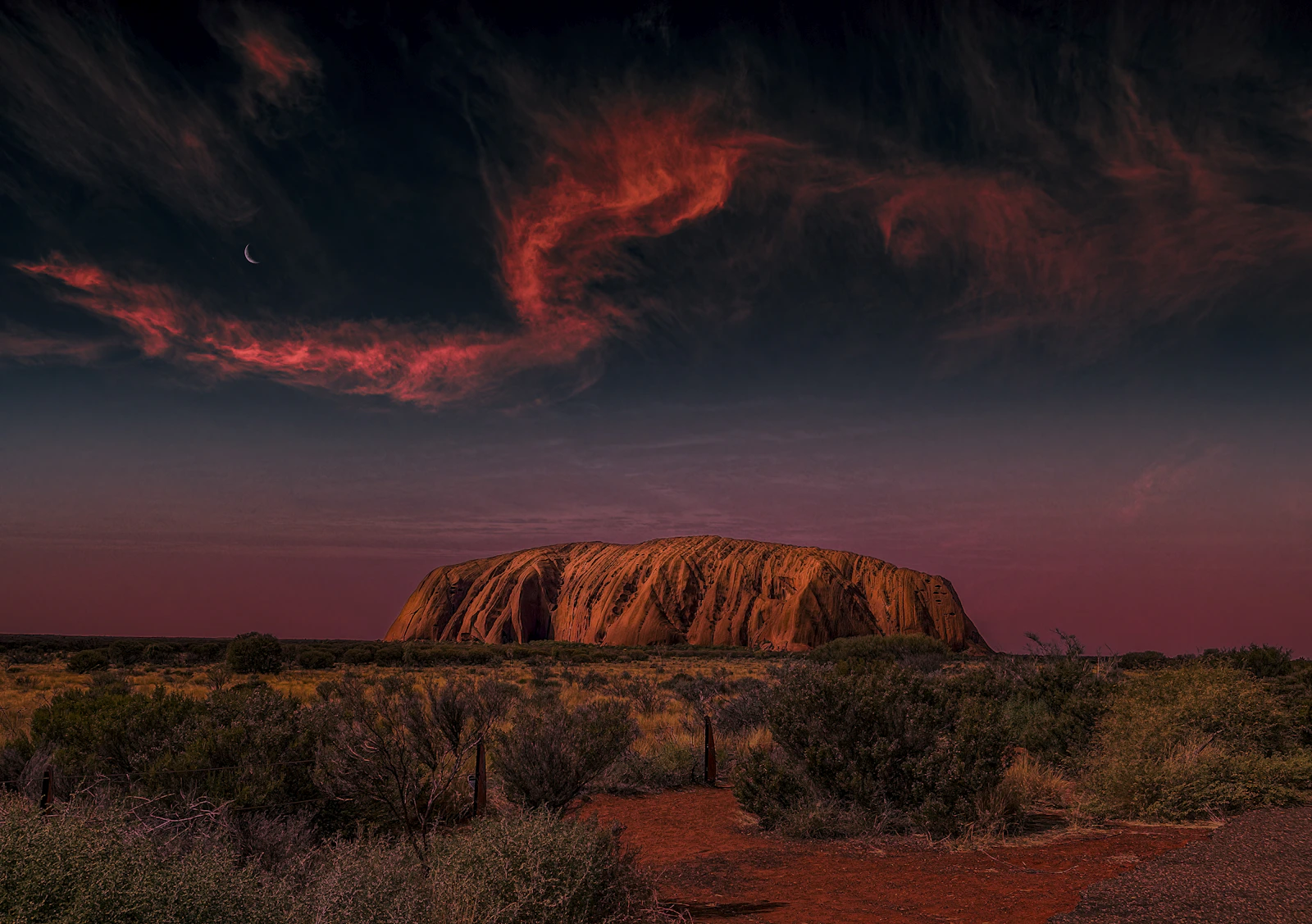
    Uluru and the Red Centre, Aboriginal spiritual heart

    348 m red sandstone monolith, sacred to the Anangu people. UNESCO mixed site (nature + culture). Climbing banned since 2019. Sunrise and sunset are essential, full base walk 3-4h.

  • 3

    Endemic wildlife found nowhere else

    Kangaroos, koalas, wombats, platypus, echidnas, Tasmanian devils, over 800 bird species. Easy spotting in national parks (Kangaroo Island, Daintree, Tasmania).

  • 4

    The road trip and vanlife capital

    Great Ocean Road (243 km, 3 days), East Coast Sydney-Cairns (2,400 km, 2 weeks), Outback crossing Adelaide-Darwin (Stuart Highway, 3,000 km). Campervan rental from €70/day, left-hand driving.

  • 5

    Sydney and Melbourne, two of the world's best cities

    Sydney: Opera House, Harbour Bridge, Bondi Beach, free harbour ferries. Melbourne: laneways café culture, street art, sport (Australian Open, AFL). Both regularly in the global top 10 most liveable cities.

Calendar

When to go to Australia

Southern hemisphere, reversed seasons. Austral summer (December-February) hot in Sydney and Melbourne, ideal for beaches. Austral winter (June-August) cool in the south but dry and comfortable in the Tropical North (Cairns, Darwin) and Outback. Austral spring (September-November) remains the best overall compromise: pleasant temperatures everywhere, wildflowers, whales offshore.

Full when-to-go guide →
Ideal Fair Avoid · Click for details

01

Jan

🌡 19-29 °C

02

Feb

🌡 19-28 °C

03

Mar

🌡 17-27 °C

04

Apr

🌡 14-24 °C

05

May

🌡 11-20 °C

06

Jun

🌡 8-17 °C

07

Jul

🌡 7-17 °C

08

Aug

🌡 8-18 °C

09

Sep

🌡 11-21 °C

10

Oct

🌡 13-24 °C

11

Nov

🌡 16-26 °C

12

Dec

🌡 18-28 °C

Detailed programs

Recommended itineraries

1 week

1-week itinerary

📅 1 week 💰 📍 Alice Springs · Uluru · Kata Tjuta · Kings Canyon
See itinerary →
2 weeks Best-seller

2-week itinerary

📅 2 weeks 💰 📍 Sydney · Byron Bay · Brisbane · Whitsundays · Cairns · Great Barrier Reef
See itinerary →
1 month

1-month itinerary

📅 1 month 💰 📍 Sydney · Melbourne · Great Ocean Road · Uluru · Cairns · Great Barrier Reef
See itinerary →

Destinations

Cities & islands of Australia

By traveler profile

Which trip suits you?

In pictures

Australia in photos

Must-do

Signature experiences

Plan your trip

Practical info

📄

Australia ETA

Mandatory for French nationals. 20 AUD via the official Australian ETA app (free). 12-month validity, 90-day stays.

Read the guide →
🚗

Car / campervan rental

Left-hand driving, French + international permit recommended. Campervan from €70/day (Travellers Autobarn, Jucy, Britz).

See sheet →
🛡️

Travel insurance

Essential. Expensive care (500 AUD/day minimum hospital stay without Medicare). Minimum €500,000 coverage.

Compare →
📡

Australia eSIM

Excellent 4G coverage in cities and along the coast, near-zero in Outback. Airalo eSIM from €8.

Compare →

How much

Australia budget

💰 Calculate my budget →

Backpacker

€2,500

  • ✈️ Paris-Sydney flight: €1,100
  • 🏨 Hostel: €35/night
  • 🍔 Self-catering + food courts: €30/day
  • 🚌 Greyhound + budget flights: €350
Recommended

Comfort

€4,500

  • ✈️ Return flight: €1,200
  • 🏨 3-4 star hotel: €140/night
  • 🍽️ Mixed restaurants: €60/day
  • 🚗 Car + domestic flights: €800

Premium

€11,000

  • ✈️ Business flight: €4,000
  • 🏨 5★ / Hamilton Island: €500/night
  • 🍽️ Fine dining: €150/day
  • 🚁 Scenic flights + private transfers: €1,500

Our picks

Prepare your trip to Australia

Our tested and updated comparisons for a smooth trip to Australia.

🏢

Best travel agency for Australia

Tailor-made agencies, organized tours, free quotes. Our selection for Australia.

See comparison →
🛡️

Travel insurance for Australia

Medical coverage, repatriation, cancellation. The best insurance for Australia.

See comparison →
📡

eSIM for Australia

Data plans, network coverage, pricing. The best eSIM to stay connected in Australia.

See comparison →

Combine with

Combine with

FAQ

FAQ

Do you need a visa or ETA for Australia in 2026? +
French and most European nationals need an ETA (Electronic Travel Authority, subclass 601) before departure. Application is exclusively via the official Australian ETA app on iOS or Android (free download). Service fee: 20 AUD (about €12). Validity: 12 months, stays of up to 90 days per entry, multiple entries. Processing: usually minutes to hours, occasionally 24h. Never use third-party websites, which overcharge with no added value.
How many days do you need in Australia? +
Given the 22h flight from Europe, 15 days is a decent minimum for the East Coast alone (Sydney + Cairns + Great Barrier Reef). 3 weeks lets you add Uluru and Melbourne. 4 weeks opens up Tasmania or the West Coast. Below 12 days on the ground, the flight time to time-on-site ratio becomes unfavourable.
When to go to Australia by region? +
Sydney and Melbourne: December-March (austral summer, beaches) or October-November (spring, ideal). Cairns and Tropical North: May-October (dry season). Avoid November-April for the Top End (monsoon, irukandji and box jellyfish). Uluru and Outback: April-September (cool days, cold nights). Tasmania: December-March (austral summer). Spring September-November = best overall compromise.
Is the Great Barrier Reef still worth visiting in 2026? +
Yes, but with awareness of bleaching from warming oceans (mass events in 2016, 2017, 2020, 2022, 2024). Serious operators (Reef Magic, Quicksilver, Sailaway) take you to healthier outer reefs from Cairns or Port Douglas, plus the Whitsundays. Dry season (June-October) offers the best visibility. Avoid November-May (jellyfish, murky waters).
Do you have to drive on the left in Australia? +
Yes, left-hand driving like the UK. Steering wheel on the right, gear stick on the left. French driving licence accepted with certified translation or an International Driving Permit (recommended). Limits: 50 km/h in cities, 100-110 km/h on highways, sometimes 130 km/h in the Northern Territory. Watch for kangaroos at dawn and dusk: avoid night driving outside urban areas.
How do you handle jet lag? +
Sydney is +9h ahead in European winter, +8h in summer. Massive shift on a 22h flight with stopover. Tips: schedule a morning arrival, get daylight exposure for the first 3 days, melatonin 1-3 mg 30 min before local bedtime, avoid sleeping on arrival before 9pm local time. Plan 4-5 days to fully adjust.
Is the Working Holiday visa open to French citizens? +
Yes. The subclass 462 Work and Holiday visa is open to French nationals aged 18 to 35 (raised to 35 in 2024). 12 months renewable 1 to 2 times under conditions (specified regional work). Fee: 650 AUD (about €390). Allows up to 6 months per employer. Job sectors: agriculture, hospitality, construction. Minimum wage: 24.10 AUD/h in 2026.
Which dangerous animals should you actually worry about? +
Statistically very few. Irukandji and box jellyfish (Top End Nov-May, swimming banned outside stinger nets). Saltwater crocodiles (signposted, never approach rivers and estuaries in the Top End). Sharks (rare attacks, monitored urban beaches). Snakes and spiders: urban fear but almost no deaths since 1981 thanks to antivenoms. The real risks remain road accidents and dehydration in the Outback.
Thomas Bernard

·

Geographer & traveler

Last updated: May 25, 2026.

View profile →